Welcome to the official website of Nanning Dongfang Foreign Languages Senior High School!


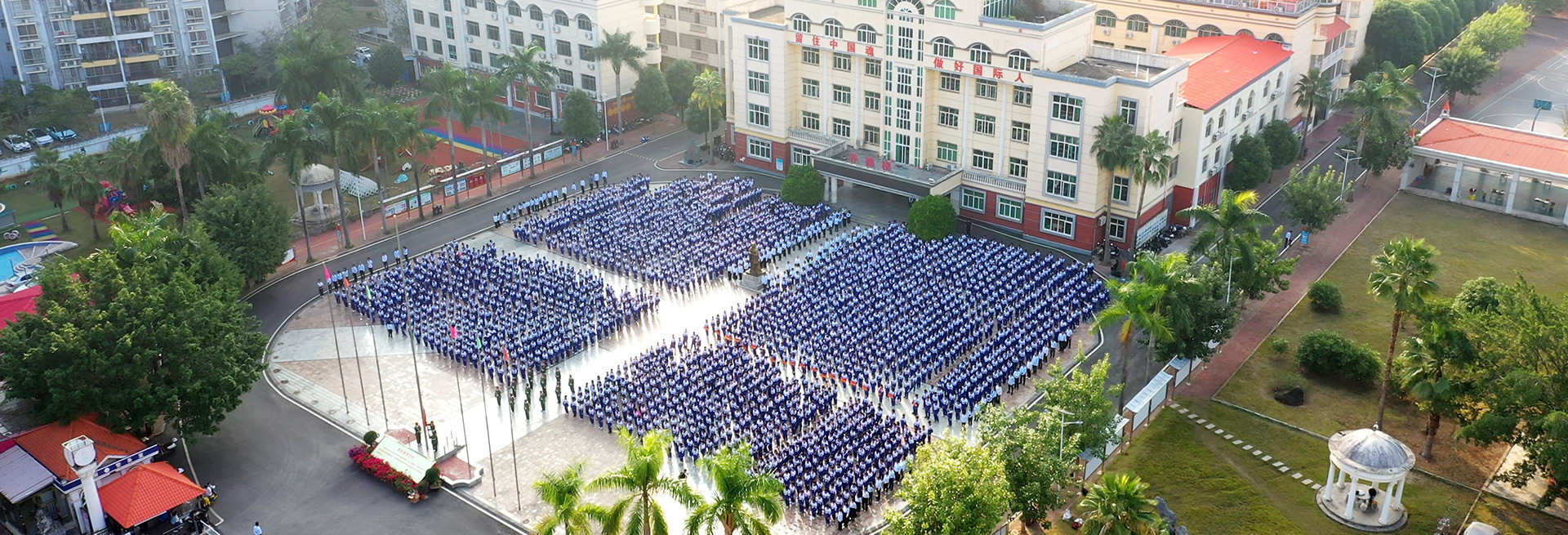

Peer Collaboration — Joint Teaching and Research Activity Among Four Schools
Release date:
2023-04-07 10:20
Source:
On the morning of October 24, the Affiliated Experimental School of Guangxi University of Foreign Languages hosted a joint instructional‑research visit involving four schools. Led by Principal Huang Haifei, more than 50 teachers from Nanning Haifei School, Yuhua School, and Xingxing School arrived at our school, marking the official start of the collaborative teaching‑and‑research activities.
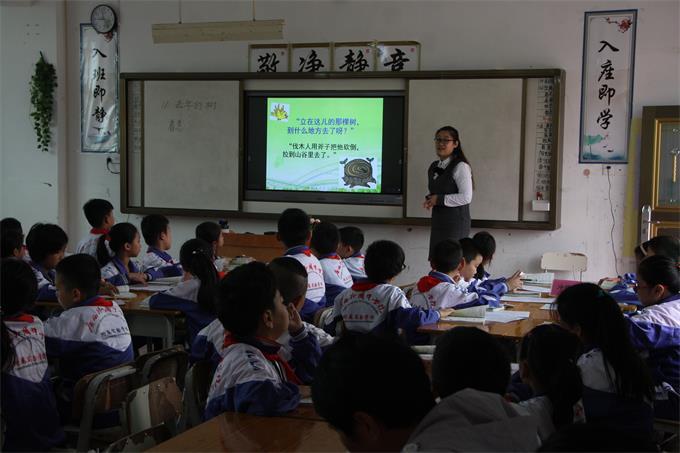
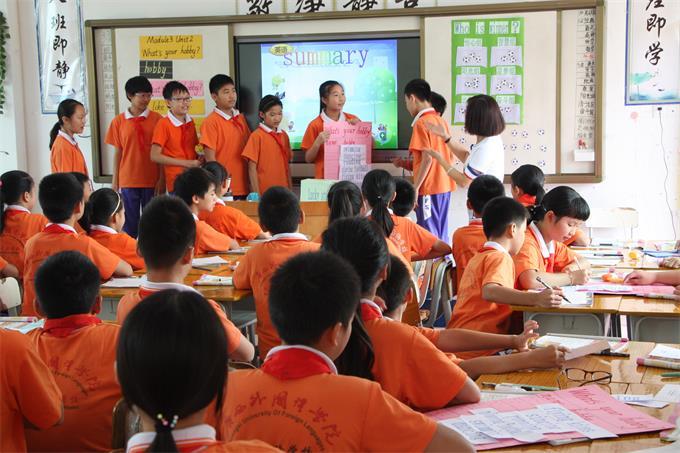
Teachers observed and evaluated our school’s Chinese, mathematics, and English classes. In Teacher Zhao Dongdong’s Chinese lesson, the emphasis was placed on “interest.” She prepared meticulously, conducted an in-depth analysis of the textbook, set clear instructional objectives, accurately identified key and challenging points, and successfully addressed them. During the class, she employed a variety of reading activities—purposeful reading, small-group reading, individual reading, choral reading, and teacher–student collaborative reading—effectively stimulating students’ enthusiasm for learning. By handing classroom instruction over to the students, she focused on sparking their interest, cultivating their oral and cognitive skills, and fostering their capacity for independent inquiry, thereby achieving the lesson’s objectives in a highly effective manner.
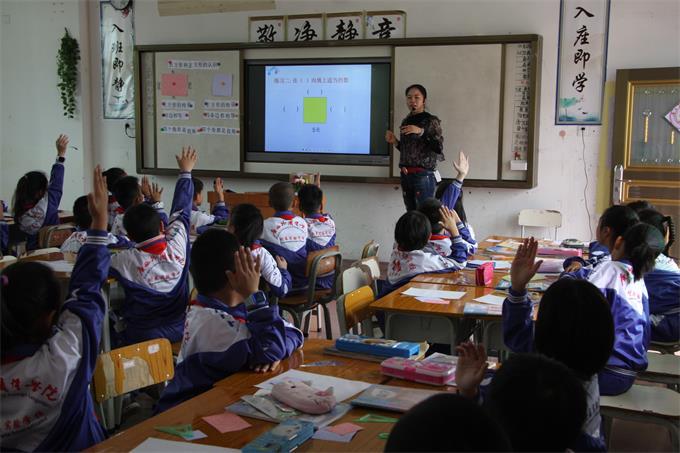
In math class, Teacher Huang Lili divides the students into several small groups, seating each group together. Rather than facing the blackboard, the students sit around tables in their groups. During the lesson, students are encouraged to pose questions on their own, and they collaboratively explore and solve these problems, fostering a sense of confidence and enjoyment in participation.
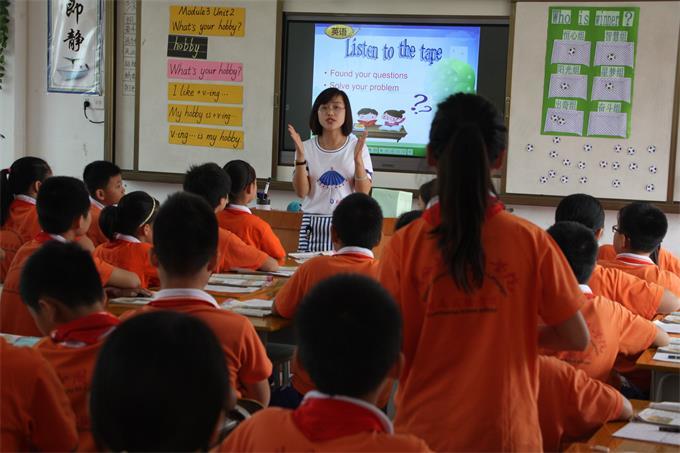
In Teacher Yu Lei’s English class, students expressed diverse perspectives and freely shared their views, creating a highly dynamic classroom atmosphere. Through mutual exchange and thoughtful prompting, they collectively achieved the lesson’s objectives, yielding outstanding teaching outcomes—thus exemplifying our school’s vibrant campus culture.
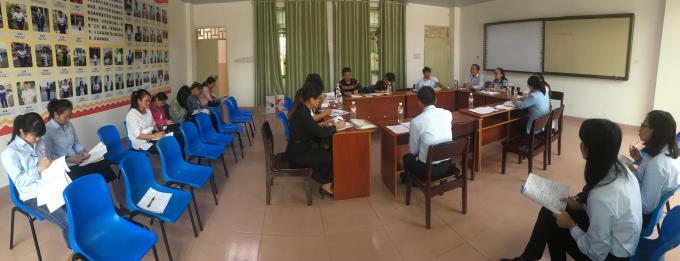
After the lessons, teachers from the four schools gathered to discuss the three classes taught at our school. During the session, they engaged in a thorough deliberation of our school’s distinctive “Green Fun‑Movement” classroom model and offered high praise. Finally, Principal Luo Zhousheng delivered a concluding remarks, elaborating on how to effectively implement this pedagogical approach and providing detailed feedback on today’s three lessons. As expected, the expert’s insights were exceptional; Principal Luo’s analysis was meticulous, incisive, and spot‑on, earning unanimous nods of agreement from teachers across all four schools.

During this event, both the teachers who conducted the lessons and those who provided feedback gained valuable experience to varying degrees. We have every reason to believe that the inter‑school instructional‑supervision and research activities will significantly advance the overall quality of teaching at our school.
Related News
Notice of Supplementary Enrollment for New Grade 10 Students Notice of Supplementary Enrollment for New Grade 10 Students, Nanning Oriental Foreign Languages Senior High School, 2026 Notice Regarding the Collection of Admission Notices for New Grade 10 Students of the Class of 2026 Dear…
● Official Weibo: @Nanning Dongfang Foreign Languages Senior High School
● School WeChat Official Account: Nanning Oriental Foreign Languages Senior High School
Quick Navigation
Contact Us
Location: No. 68, Tongtai Road, Qingxiu District, Nanning City, Guangxi Province
School Office:0771—4780301
Fax:0771—4780303
School email:gxufls@163.com

WeChat Official Account
Ride Information:Take bus routes 42 or 704 directly to the school entrance; or take routes 87, 89, 90, 97, B98, 209, 701, or 706 to the Xianhu–Kaitai Road stop, then walk 200 meters to reach the school.
Copyright 2023 © Nanning Oriental Foreign Languages Senior High School. All Rights Reserved. Website Development:China Enterprise Dynamics Nanning SEO Business license