Welcome to the official website of Nanning Dongfang Foreign Languages Senior High School!



The Affiliated Experimental School of Guangxi University of Foreign Languages Conducts a Special Training Session on Drowning Prevention.
Release date:
2019-06-04 17:24
Source:
Admissions Office, Affiliated Experimental School of Guangxi University of Foreign Languages
In order to implement the spirit of the “Notice on Carrying Out 2019 Training on Drowning Prevention Knowledge and Skills for Primary and Secondary School Students,” jointly issued by the Nanning Municipal Education Bureau and the Nanning Red Cross Society, and to promote Red Cross first-aid knowledge, strengthen students’ awareness of emergency response, and enhance their self‑rescue and mutual‑assistance capabilities, the Nanning Red Cross Lecture Group conducted a training session on drowning‑prevention first aid at our school on the afternoon of May 31. All teachers and students of Grade 7 attended the session.
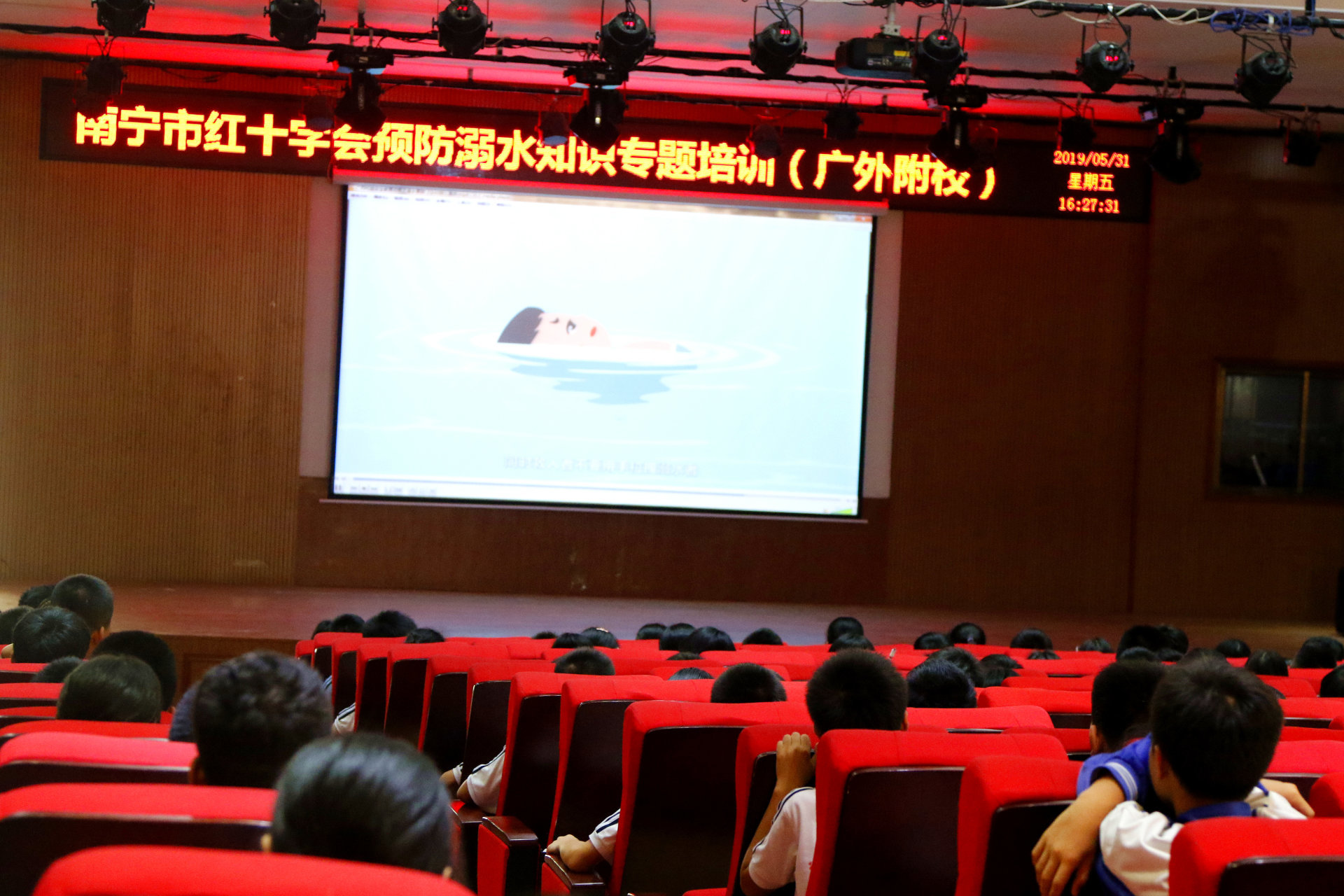
The Affiliated Experimental School of Guangxi University of Foreign Languages Conducts a Special Training Session on Drowning Prevention.
Fei Xiansheng, an instructor with the Nanning Red Cross Society’s emergency first-aid training program, began by using multimedia presentations to highlight cases of middle-school students who drowned across the country in recent years, analyzing the underlying causes. Through vivid real-life examples, he underscored the critical importance of drowning prevention among students. He also employed a variety of engaging formats—on-site demonstrations, animated videos, and interactive participation—to clearly teach students essential swimming skills, basic first-aid procedures for drowning incidents, and practical on‑scene rescue techniques, including self-rescue, water‑based assistance, and shore‑side rescue.

Fei Xiansheng, an instructor for emergency first-aid training at the Nanning Red Cross Society, explained to the students how to prevent drowning.
Secondly, Teacher Fei employed a variety of interactive methods—such as on‑site Q&A and live demonstrations of water‑rescue techniques, including self‑rescue and mutual rescue, relief of cramps, and shore‑based assistance—to reinforce the children’s knowledge of drowning prevention. These included practical skills like how to rescue a drowning person, how to throw a lifebuoy or other flotation devices, and how to use a bamboo pole to pull a victim ashore. Following this, a mannequin was used to demonstrate the steps and key principles of cardiopulmonary resuscitation (CPR). During the training session, students listened attentively, participated actively, and personally practiced CPR and other first‑aid procedures. Through hands‑on learning and interaction, they gained a deeper understanding of first‑aid concepts, mastered essential skills, and enhanced their ability to provide self‑help and mutual assistance.
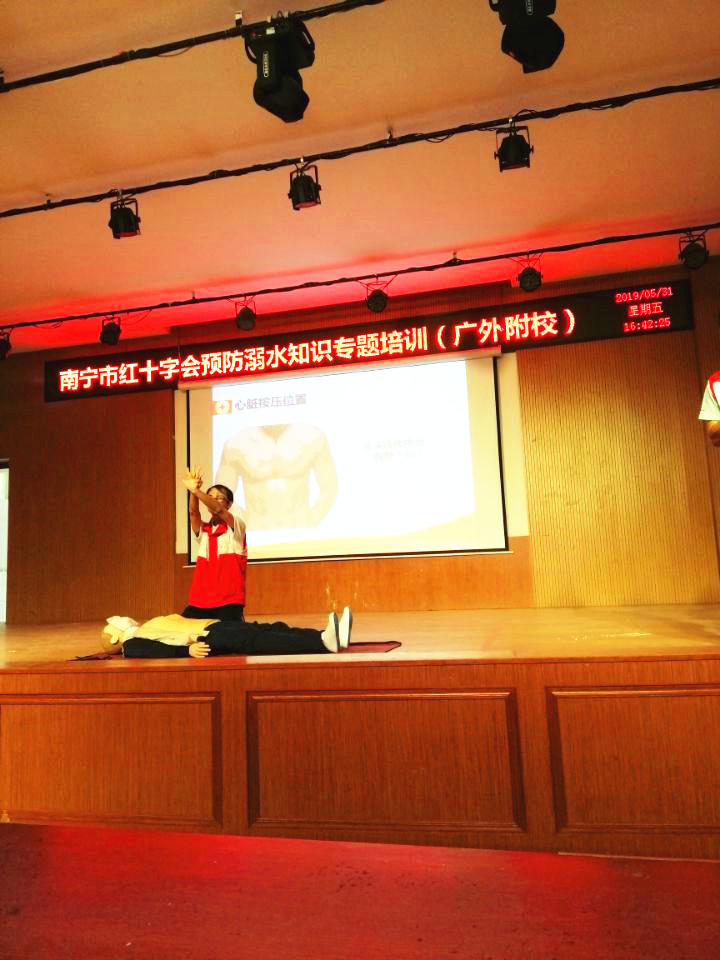
Lecturer Fei Xiansheng demonstrated cardiopulmonary resuscitation on-site.
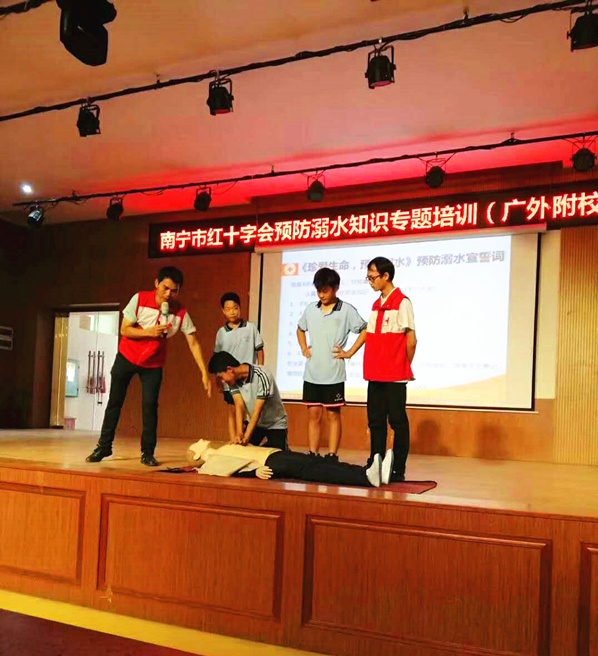
Lecturer Fei Xiansheng instructs students in cardiopulmonary resuscitation.
Finally, Teacher Fei summarized the training and outlined six guidelines for preventing drowning during the summer: First, do not swim alone without permission; second, do not swim with others without authorization; third, do not swim without a parent or teacher supervising; fourth, do not swim in waters you are unfamiliar with; fifth, do not swim in waters lacking safety facilities or lifeguards; and sixth, do not attempt to rescue someone in the water on your own.
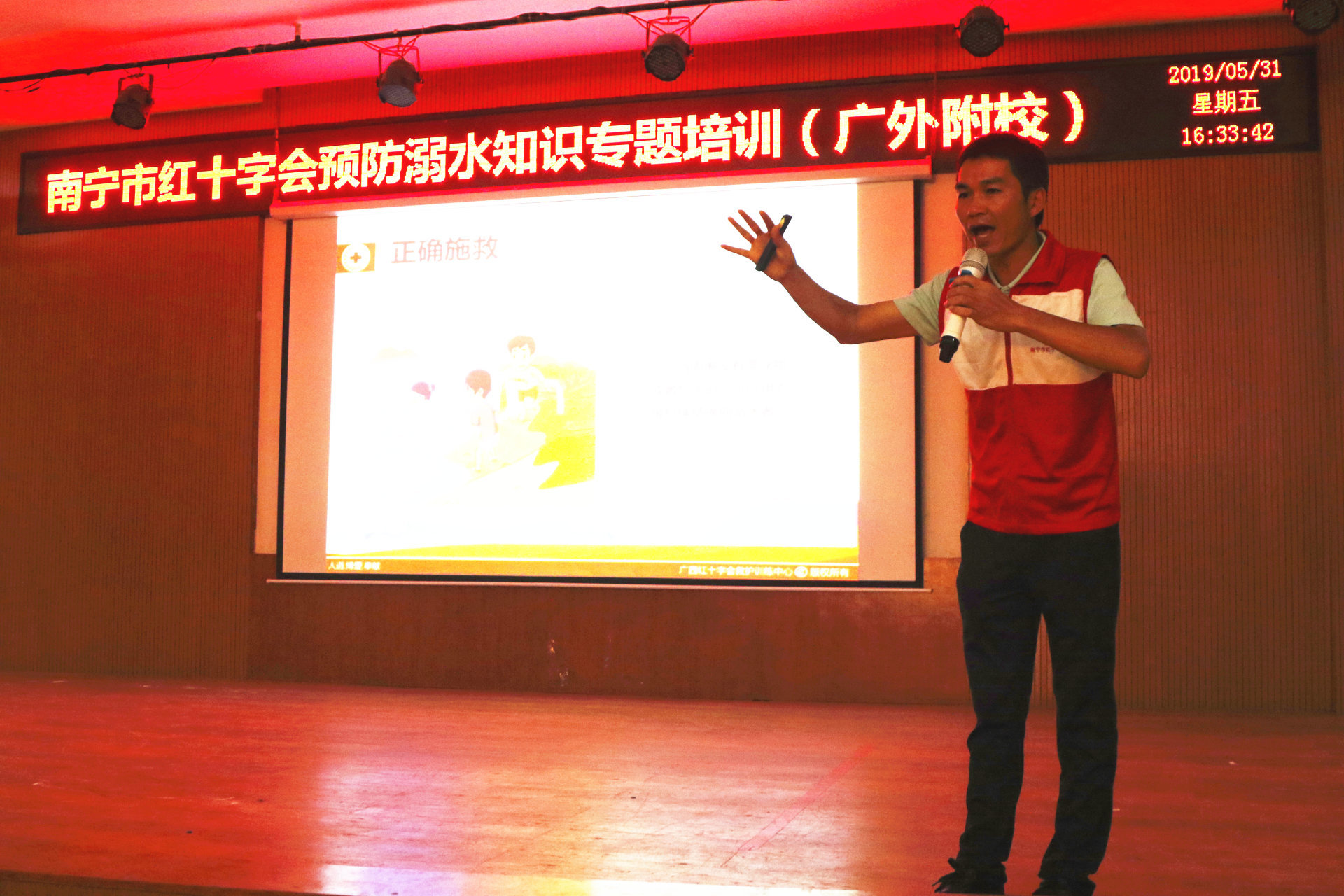
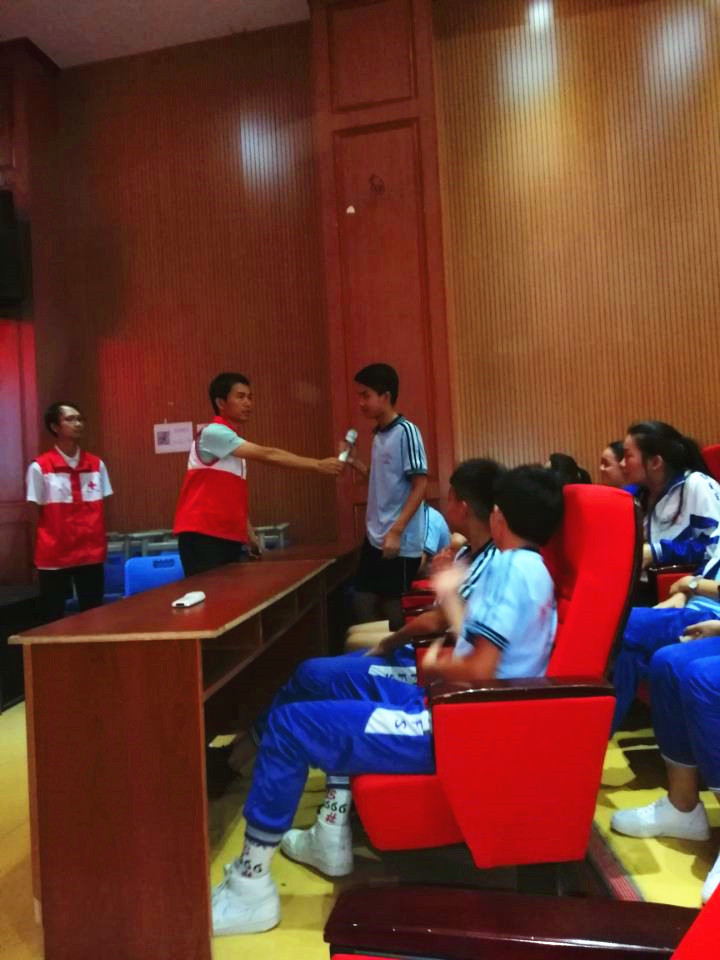
Lecturer Fei Xiansheng interacted with students on site.

All teachers and students of Grade 7 listened attentively to the training session.
Through this specialized training, teachers and students have gained a thorough understanding of and proficiency in lifesaving first-aid techniques for drowning incidents, strengthened their safety awareness and self‑protection skills, and enhanced their ability to avoid hazards and rescue themselves.
Related News
Notice of Supplementary Enrollment for New Grade 10 Students Notice of Supplementary Enrollment for New Grade 10 Students, Nanning Oriental Foreign Languages Senior High School, 2026 Notice Regarding the Collection of Admission Notices for New Grade 10 Students of the Class of 2026 Dear…
● Official Weibo: @Nanning Dongfang Foreign Languages Senior High School
● School WeChat Official Account: Nanning Oriental Foreign Languages Senior High School
Quick Navigation
Contact Us
Location: No. 68, Tongtai Road, Qingxiu District, Nanning City, Guangxi Province
School Office:0771—4780301
Fax:0771—4780303
School email:gxufls@163.com

WeChat Official Account
Ride Information:Take bus routes 42 or 704 directly to the school entrance; or take routes 87, 89, 90, 97, B98, 209, 701, or 706 to the Xianhu–Kaitai Road stop, then walk 200 meters to reach the school.
Copyright 2023 © Nanning Oriental Foreign Languages Senior High School. All Rights Reserved. Website Development:China Enterprise Dynamics Nanning SEO Business license